The Workforce Nobody Counted — Until Now
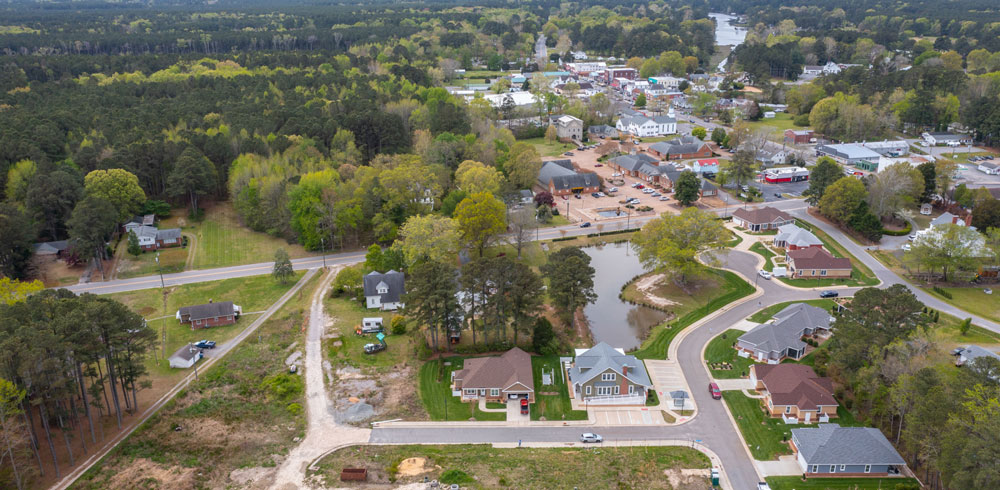
For most of Mathews County's history, its workforce was defined by the water. Watermen, boat builders, net menders, crabbers, oystermen — people whose jobs were inseparable from the landscape they worked in. The county's economic identity was built around what the Bay provided and what the land could support. But a shift has been quietly underway for several years now, accelerated by the pandemic and confirmed by Census data: the second-largest employment sector in Mathews County is people who work entirely remotely.
A January 2024 analysis by Cardinal News, drawing on the U.S. Census Bureau's American Community Survey data, found that in Mathews County — along with a handful of other Virginia localities including Lancaster County, Northumberland County, and Rappahannock County — remote workers now constitute the second-biggest employment sector. Not the second-biggest industry. The second-biggest category of worker, period, behind only whatever the single largest local employer sector happens to be.
This is a data point worth pausing on. Mathews has no major regional employer, no hospital, no manufacturing campus. What it has is a quality of life — water access, quiet, natural beauty, relative affordability compared to metro areas — that turns out to be exactly what a certain category of knowledge worker is now willing to pay for, or relocate for, when they're no longer tethered to a commute.
What the Numbers Actually Say
The Cardinal News analysis, authored by Dwayne Yancey and published January 24, 2024, examined ACS data to identify which Virginia localities had seen remote workers rise to the top employment sectors. In parts of the state — including several affluent suburban counties near Northern Virginia — remote workers had become the single largest sector. In Mathews and nearby rural coastal counties, they ranked second.
The statewide picture provided by the data is striking in its own right. In some Virginia localities, one-quarter of the entire workforce now works remotely. That isn't a post-pandemic blip — it's a structural shift in where work can happen and who benefits. For rural counties that were previously disadvantaged by their distance from urban employment centers, the new geography of remote work is, in effect, a second chance.
The Infrastructure That Makes It Work
Remote work without broadband is a contradiction in terms. For years, Mathews County's coastal geography — the same water that makes it beautiful — also made laying infrastructure expensive and difficult. The peninsula's tidal cut-throughs and irregular terrain meant that standard cable and fiber buildouts required more engineering per household than comparable land-locked counties. The result was that large portions of the county were served by satellite, dial-up, or fixed wireless connections that were adequate for email but inadequate for video conferencing, cloud-based work, or streaming.
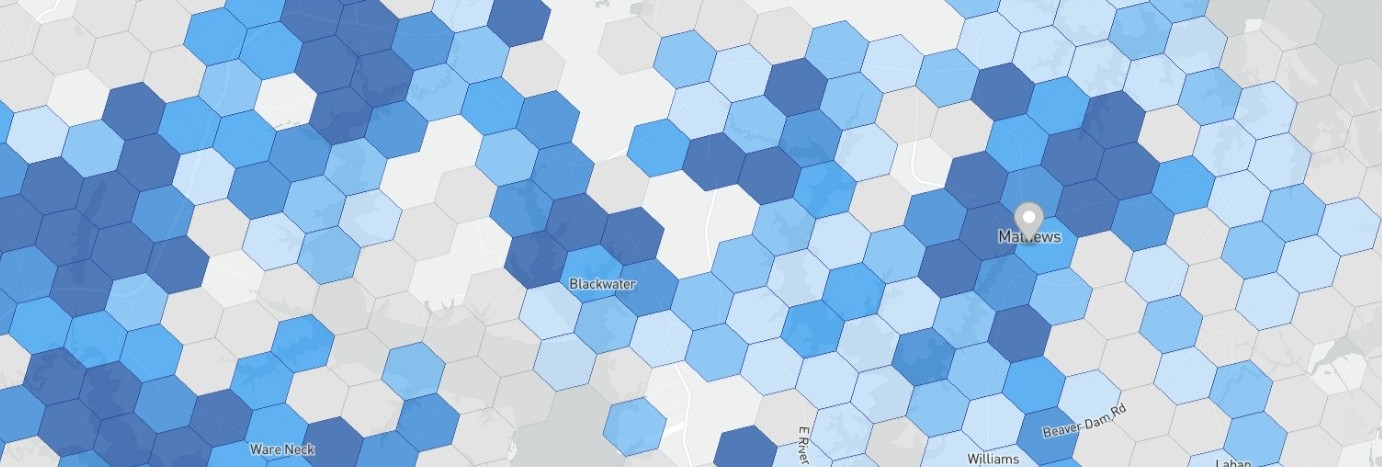
That changed with a coordinated series of investments through Virginia's Telecommunications Initiative (VATI) grant program, administered by the Department of Housing and Community Development. Breezeline — one of the country's largest regional internet service providers — partnered with Mathews County and three neighboring counties (Caroline, Lancaster, and Middlesex) on a $7.2 million, 150-mile fiber-broadband expansion. The project was funded through a $4.2 million VATI grant, $1.5 million from Breezeline, and the remaining $1.5 million split among the four participating counties.
Construction began in early 2022, with the first homes activated in May of that year. Breezeline announced completion of the full build in February 2024. When fully subscribed, the network will serve more than 1,400 homes and businesses across the four-county footprint, with gigabit-speed fiber-to-the-home (FTTH) service available for the first time in areas that had previously gone without.
Separate Projects, Same Goal
The Breezeline VATI project wasn't the only broadband buildout happening in the county. Open Broadband, a smaller regional provider, was simultaneously completing a separate VATI-funded project in Mathews under the county's Broadband Advisory Board, chaired by Judy Rowe. The county's advisory board tracked both projects closely through their respective construction phases, publishing regular updates at mathewscountyva.gov and maintaining address-level service lists so residents could confirm whether their homes fell within the newly served areas.
Together, the two projects dramatically expanded the share of Mathews County households with access to reliable, high-speed internet — a precondition not just for remote work, but for telehealth appointments, online education, and the kind of digital economic participation that is increasingly a baseline expectation for competitive communities.
The Migration Opportunity
The convergence of these trends — demonstrated Census-level evidence of remote worker presence, completed fiber infrastructure, and a distinctive waterfront lifestyle — positions Mathews County to actively recruit a demographic that many rural counties would love to attract but lack the assets to compete for.
Remote workers who can choose where they live tend to optimize for quality of life, cost of living relative to their income, and physical environment. Mathews scores well on all three. Median home prices remain a fraction of Northern Virginia or Richmond suburbs. The Chesapeake Bay and its tributaries offer boating, kayaking, crabbing, fishing, and waterfront living. And the county is within two to three hours of multiple major metro areas — close enough for occasional in-person obligations, far enough to be genuinely separate from urban density.
The EDA's opportunity is to make this case systematically — to turn organic migration into targeted recruitment, and to build the local amenities (broadband, housing, community services) that make remote workers choose to stay and put down roots rather than treating Mathews as a temporary refuge.